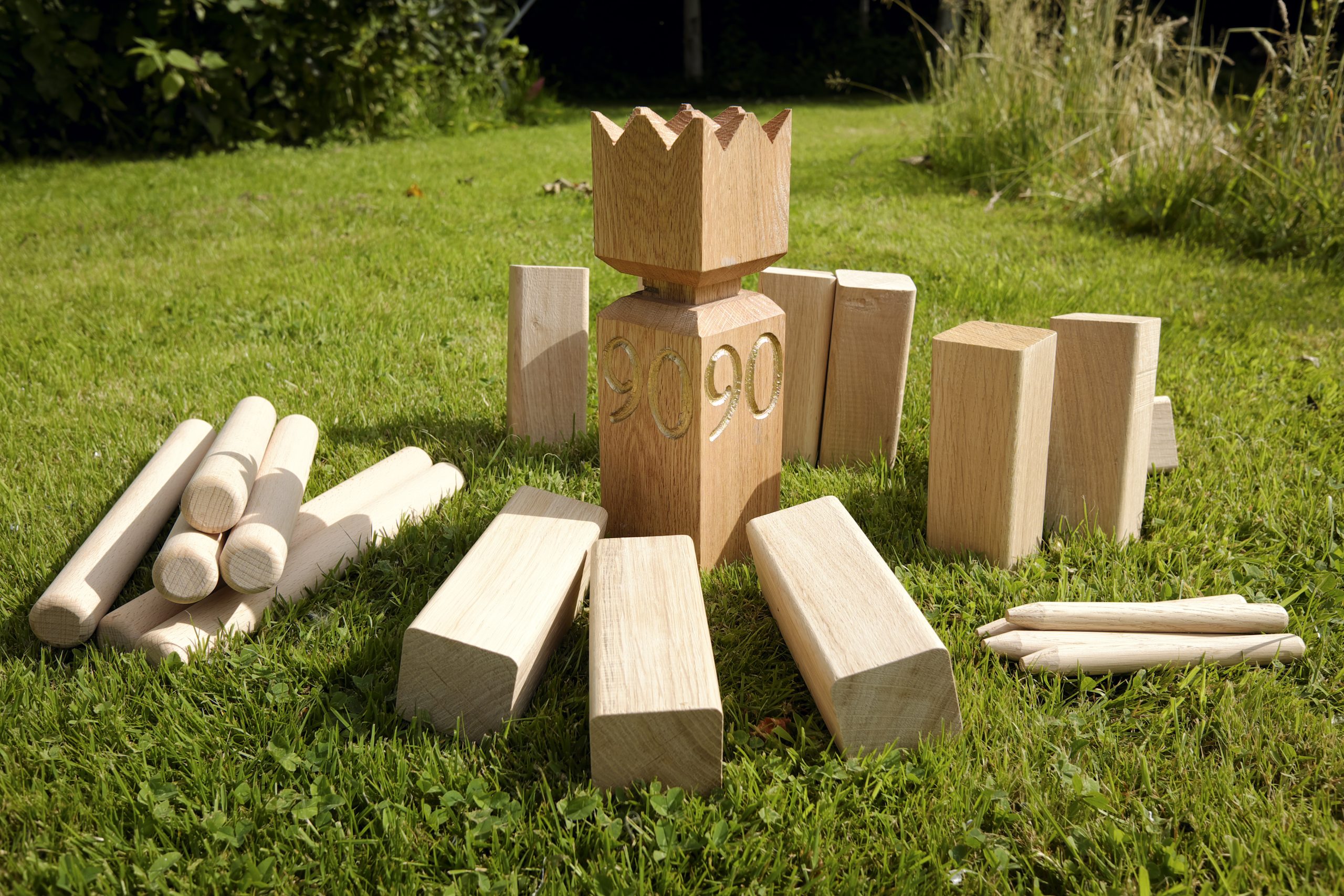
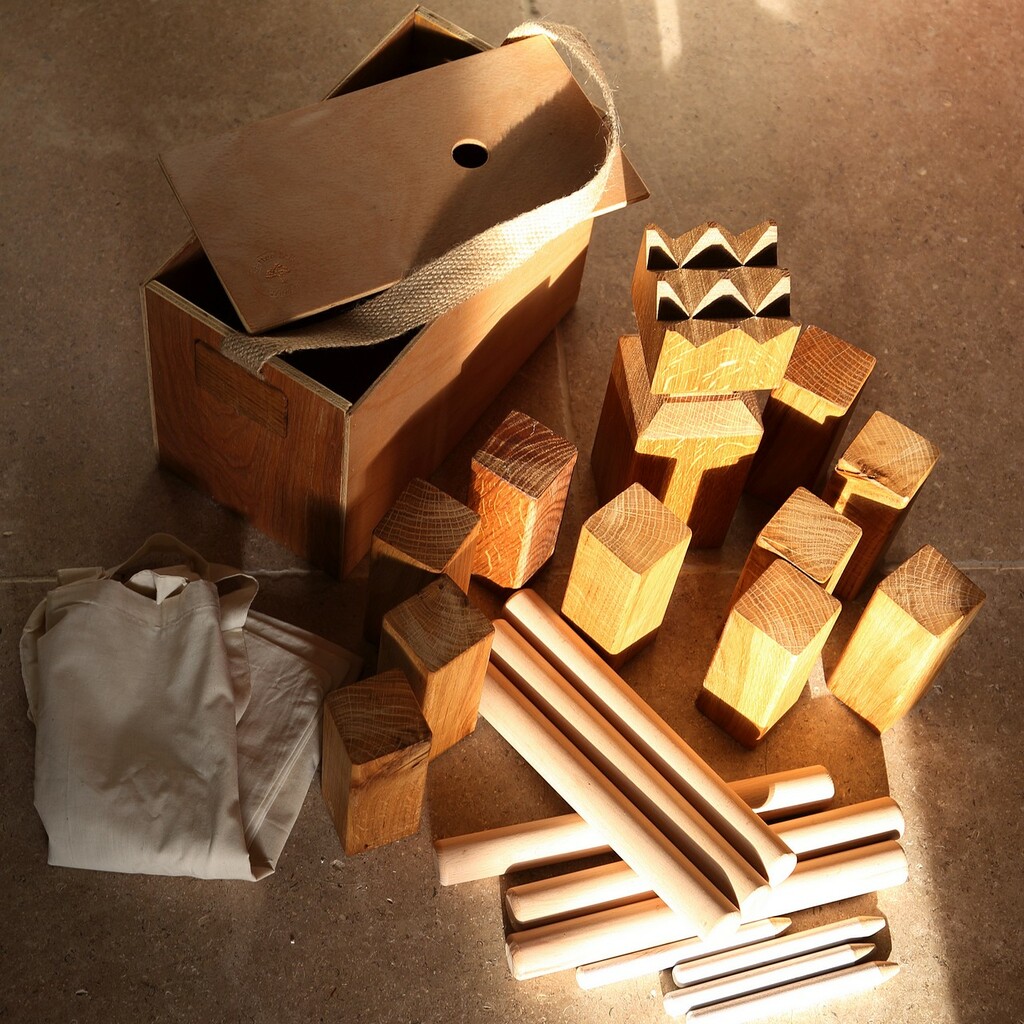
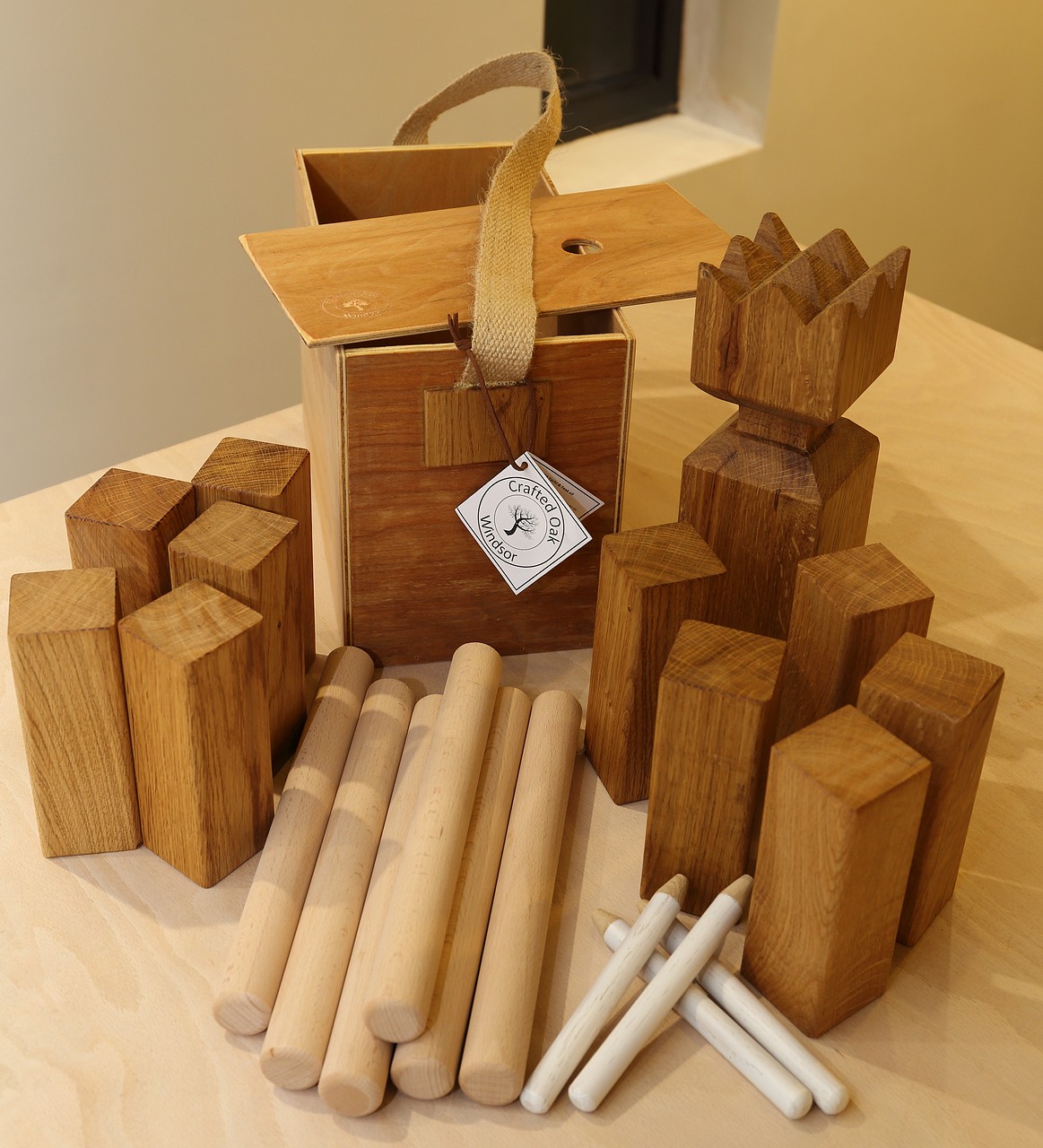
- 6 beech throwing batons
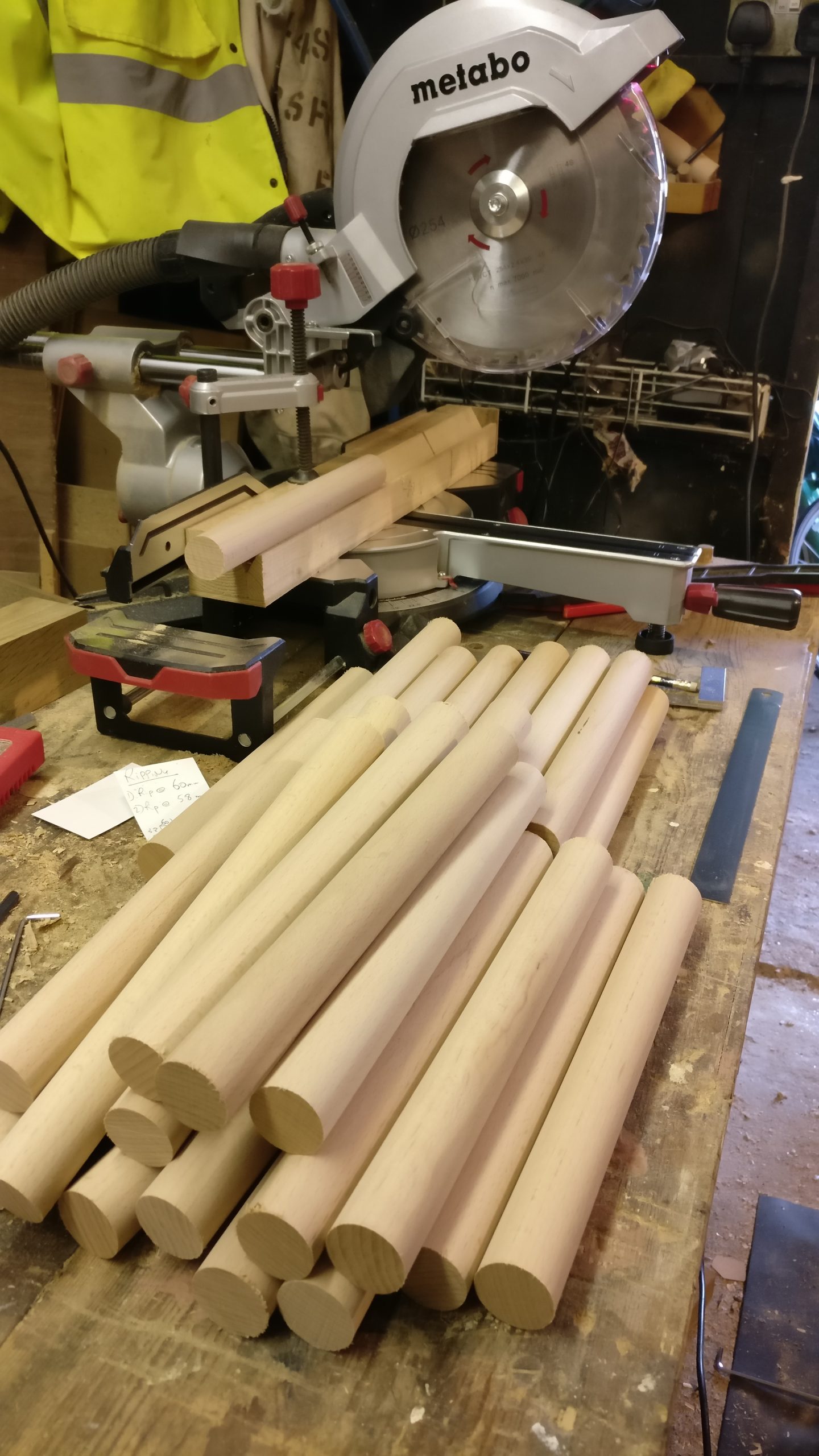
- 10 oak Kubbs
- 1 oak King
- 4 oak corner pegs
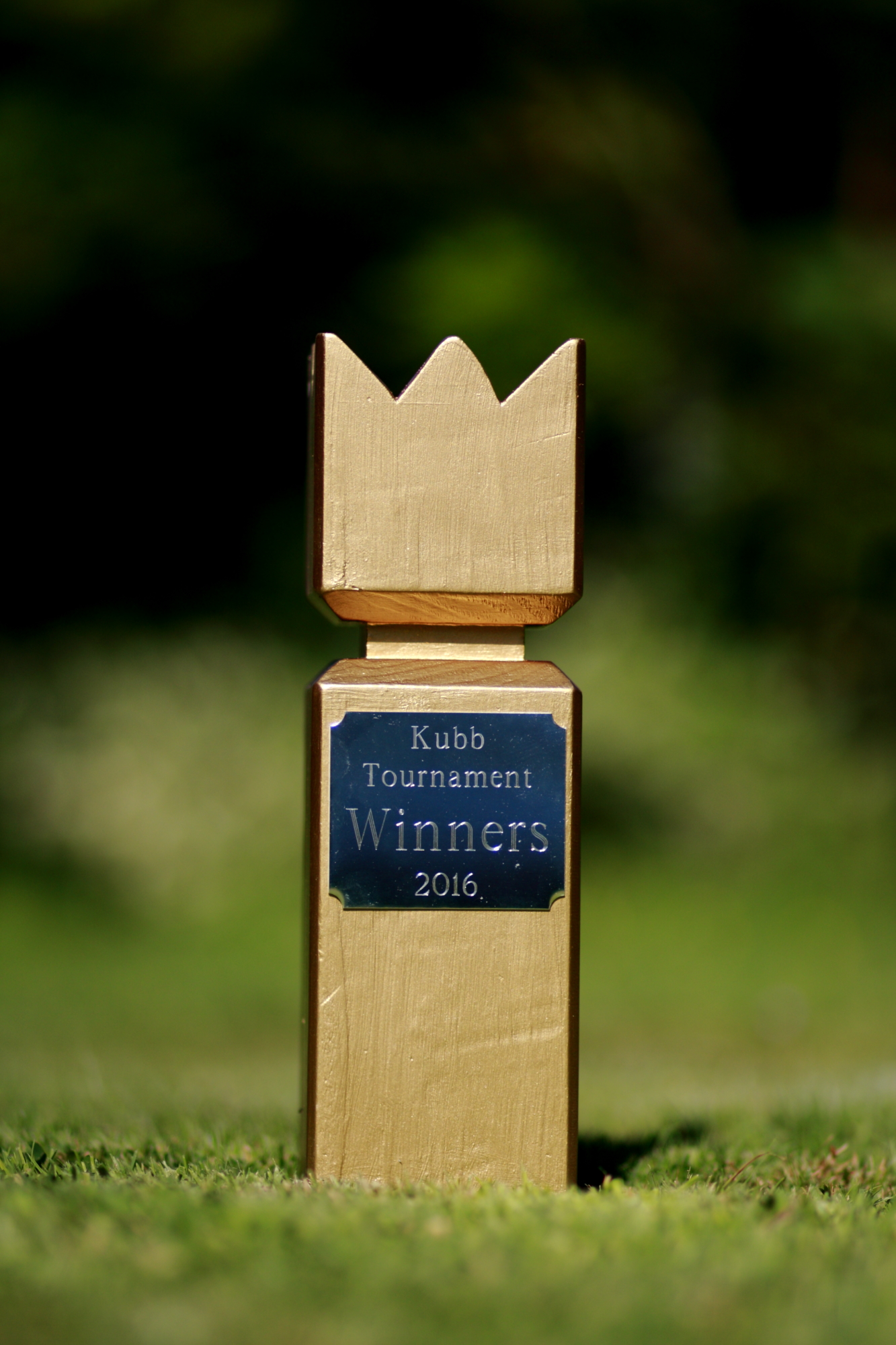
There is something rather wonderful about the sound of a beech baton hitting an oak Kubb or felling the King, which brings added pleasure to playing this inclusive game for all ages with friends or family. An optional engraving on the King, such as a couple’s names and the date of their wedding, it makes a beautiful and thoughtful gift that can be passed down their family like an old croquet set.
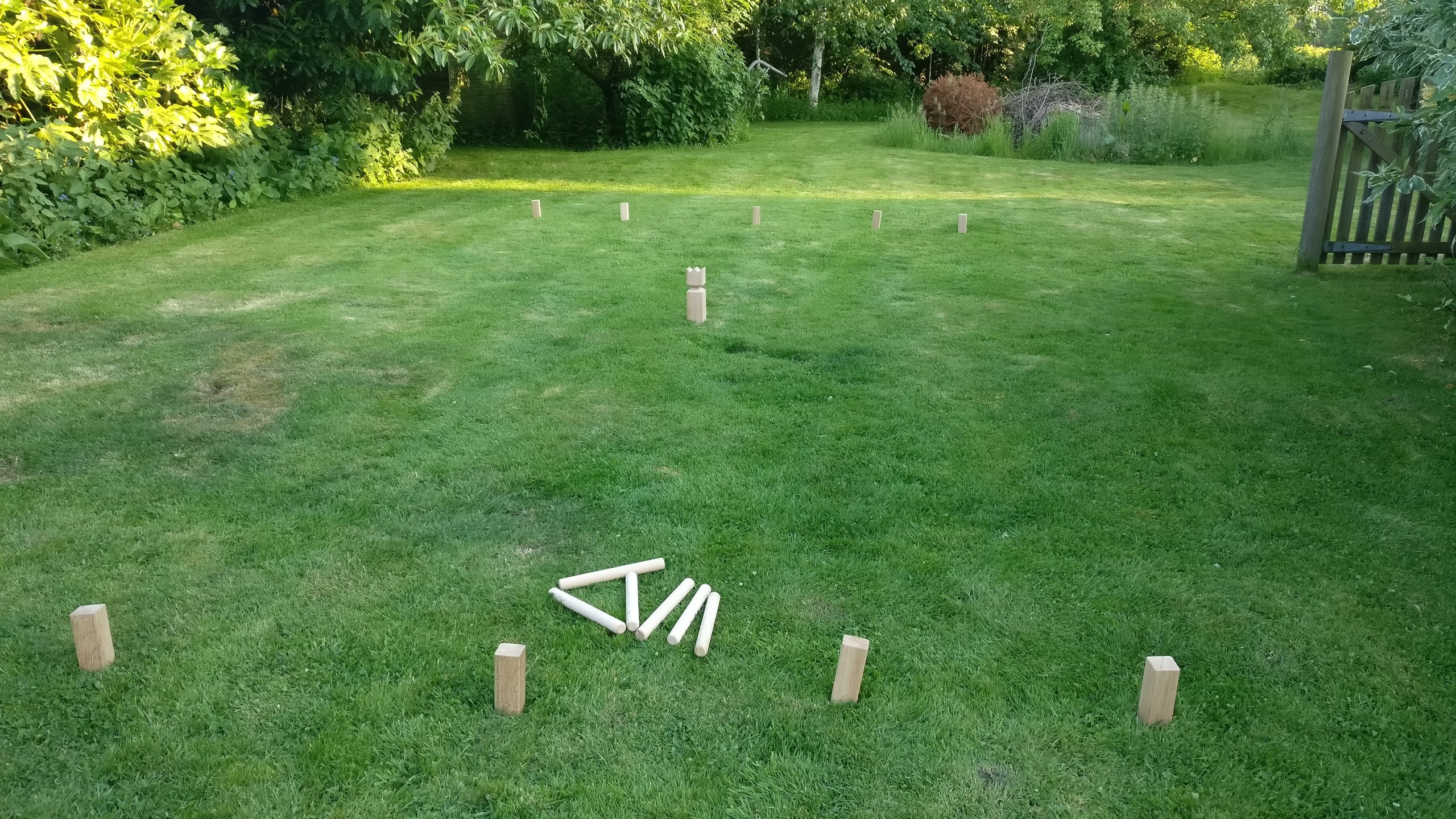
Kubb, pronounced ‘cub’ or sometimes ‘koob’ to reflect its Scandinavian heritage hence also the name Viking Chess, is an outdoor game that involves gently throwing wooden battens with the aim of knocking over wooden blocks (Kubbs) then the larger wooden King to win. There is no scoring, other than how many games have been won.
Stored in a canvas bag or wooden box, it can be kept in the garden shed or car and be set up in minutes on a patch of grass or the beach, whenever two or more people gather to play. Each side throws six batons during their turn, so a team of three would throw two battens each.
A small rule variation described on this site, makes the game quicker and more enjoyable for all ages. The pitch size can be varied to suit all abilities and with a single game typically lasting no more than ten to twenty minutes, best of three, swapping ends each time, works well. It makes little difference who goes first because the beauty of Kubb is that fortunes change quickly and throwing ability is no handicap to winning and having fun.
The oak Kubbs and King will age beautifully over years of use, as will the smoother grained beech batons. They do not need any wood care treatment other than the kindness of storing the set somewhere dry after use. Trapped moisture could encourage mould so let the set air if damp.



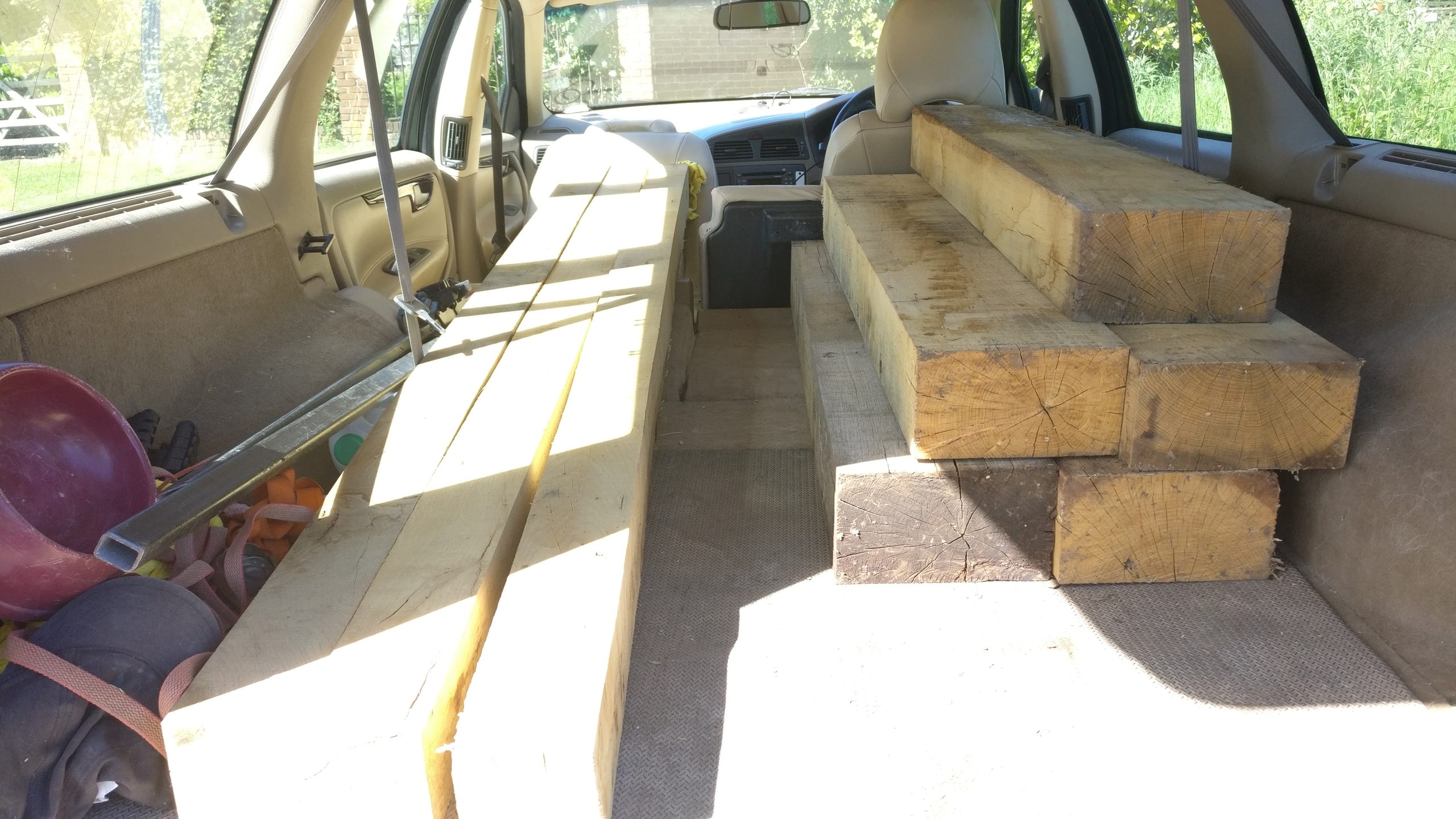
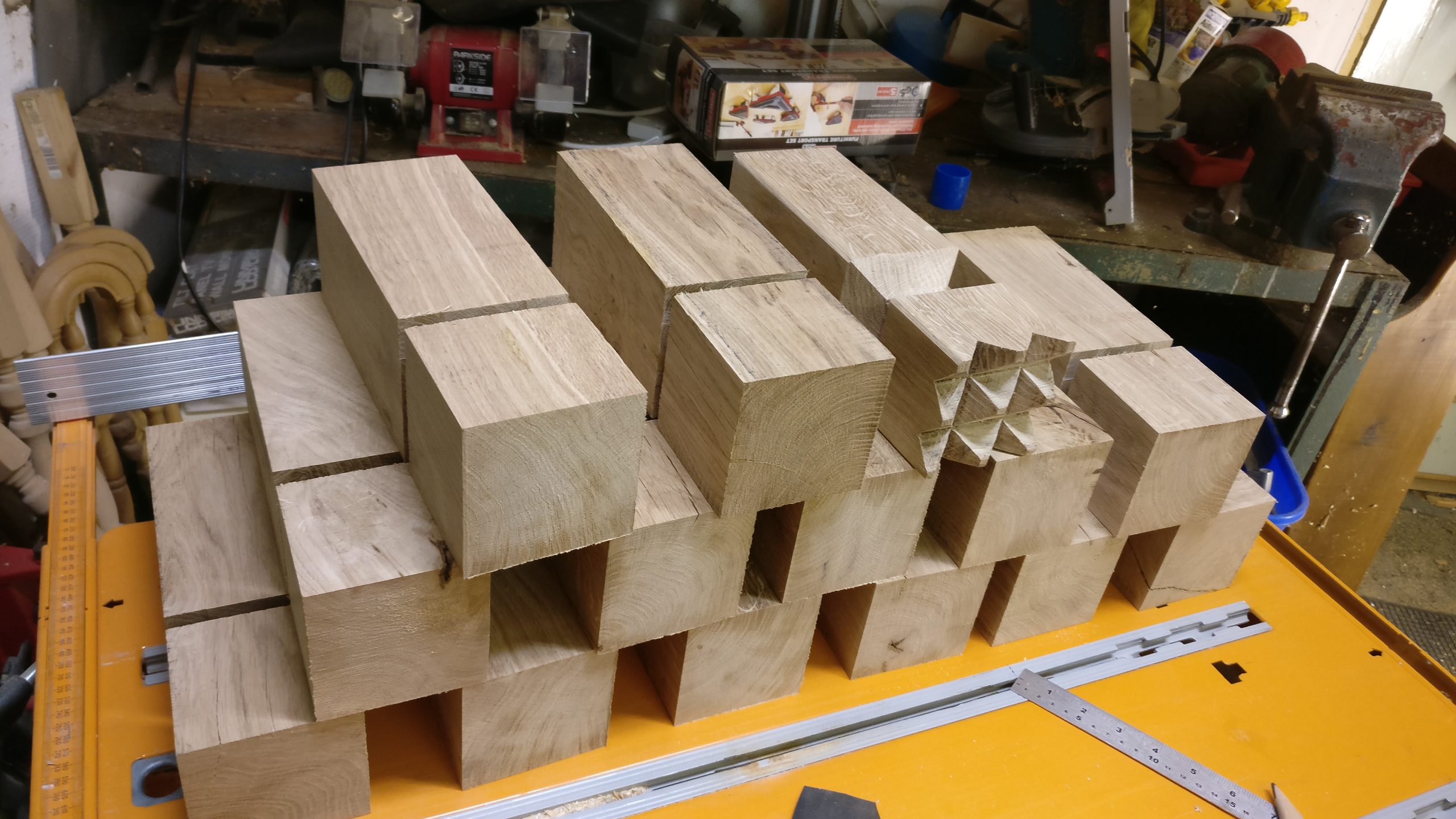
Making the Kubb set is a lengthy process that starts with the ripping the green oak sleepers into narrow lengths on the band saw, then squaring the timber and reducing it to the exact thickness. Cutting to length, rounding and sanding is the home straight.
Batons and pitch markers are made from dowel rods that I buy then cut to size. The ends are rounded on the table router and I use a bench sander to create a blunt point on each corner stake.
The King is a substantial 280cm high piece of oak. I cut its profile on the band saw and add the details with a Japanese pull saw before adding the chamfer with a planner, finishing on the bench sander.